
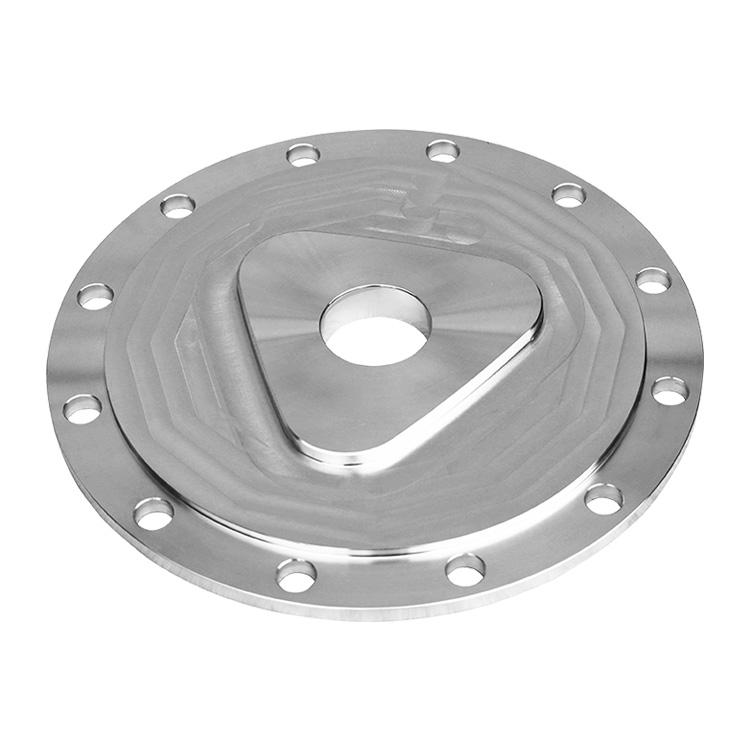
A large diameter industrial pipe flange for heavy industry is a critical connection component used in
high-demand piping systems where strength, sealing reliability, pressure resistance, and long service life are essential.
In heavy industrial environments, pipe flanges are widely applied in pipelines that transport fluids, gases, steam,
chemicals, slurry, oil, and other process media under demanding operating conditions. These flanges are designed to
connect pipes, valves, pumps, pressure vessels, and equipment safely and efficiently, while also allowing easy
disassembly for inspection, cleaning, repair, and system expansion.
For industries that require dependable pipeline integrity, the large diameter industrial pipe flange plays a vital role
in maintaining operational continuity. Compared with smaller standard components, large diameter flanges are engineered
for higher structural loads, larger bore sizes, and more severe service conditions. They are commonly used in
applications where pipeline systems must handle high pressure, elevated temperature, vibration, corrosion, or large
flow volumes. Because of these requirements, buyers and engineers often search for strong, durable, and accurately
manufactured flange solutions that support long-term performance and leak-free operation.
This guide provides a clear overview of large diameter industrial pipe flanges for heavy industry, including their
definition, main advantages, typical types, material options, size considerations, surface finishes, pressure ratings,
and application areas. The information below is written for SEO-friendly use on blog pages, catalog pages, industrial
product pages, and technical content sections.
A large diameter industrial pipe flange is a circular mechanical connector used to join sections of
piping or attach pipes to equipment in industrial systems with larger nominal diameters. These flanges are typically
manufactured in standardized dimensions and are installed as part of a bolted joint with a gasket placed between the
flange faces to create a tight seal. The term large diameter generally refers to flange sizes above common
small-bore pipeline dimensions, often used in medium-to-large process systems, utility systems, and heavy-duty
infrastructure.
In heavy industry, large diameter flanges are not only connection points; they are load-bearing components that help
manage internal pressure, mechanical stress, thermal expansion, and alignment tolerances. Their design must support
the system’s safety, efficiency, and maintainability. Depending on the service conditions, large diameter pipe flanges
may be welded, threaded, slip-on, blind, lap joint, socket weld, or specialized custom-engineered types.
Heavy industry relies on large-scale piping systems to move critical materials continuously and safely. In such
environments, connection failures can lead to leaks, shutdowns, safety risks, production losses, and costly repairs.
A properly selected large diameter industrial pipe flange ensures that the piping system can handle demanding loads
while keeping maintenance simple and predictable.
The importance of these flanges is especially clear in industries such as oil and gas, petrochemical processing,
power generation, marine engineering, mining, metallurgy, pulp and paper, water treatment, and large-scale chemical
production. In these sectors, flange quality affects not only pipeline performance but also plant safety and
compliance with technical standards.
| Benefit | Description | Industrial Value |
|---|---|---|
| Strong Connection | Provides a rigid and stable joint for large piping systems. | Improves system safety and load support. |
| Leak Resistance | Works with gaskets and bolting to create a secure seal. | Reduces fluid loss and environmental risk. |
| Easy Maintenance | Allows disassembly without cutting the pipe. | Simplifies inspection, replacement, and repair. |
| High Pressure Capacity | Can be manufactured for demanding pressure classes. | Suitable for severe-duty process systems. |
| Large Flow Support | Designed for wide-diameter pipelines and high-volume transport. | Ideal for heavy industrial flow systems. |
| Material Flexibility | Available in carbon steel, stainless steel, alloy steel, and more. | Supports different media and operating conditions. |
| Standardization | Manufactured to common international dimensions and ratings. | Improves compatibility and procurement efficiency. |
Large diameter industrial pipe flanges are available in several types, each designed for specific installation
methods, pressure levels, and operating requirements. Selecting the correct flange type is essential for reliability
and cost efficiency.
| Flange Type | Main Feature | Typical Use |
|---|---|---|
| Weld Neck Flange | Long tapered hub with butt-weld connection. | High-pressure and high-temperature systems. |
| Slip-On Flange | Slides over the pipe and is welded on both sides. | General industrial applications with moderate loads. |
| Blind Flange | Solid disc used to close the end of a pipeline. | Testing, shutdowns, and pipeline termination. |
| Lap Joint Flange | Used with a stub end for easy alignment. | Systems requiring frequent disassembly. |
| Socket Weld Flange | Pipe inserts into a socket before welding. | Smaller large-bore systems with compact layout needs. |
| Threaded Flange | Connected by internal threading without welding. | Special cases where welding is not preferred. |
| Orifice Flange | Designed for flow measurement applications. | Process control and metering systems. |
| Custom Large Flange | Engineered for non-standard dimensions or special conditions. | Special heavy-duty projects and custom equipment. |
Material selection is one of the most important aspects of choosing a large diameter industrial pipe flange. Heavy
industry often exposes piping systems to corrosion, heat, vibration, abrasion, and pressure fluctuations, so the flange
material must match the service environment. The most common flange materials are listed below.
| Material | Main Characteristics | Common Industrial Use |
|---|---|---|
| Carbon Steel | Strong, economical, and widely used for general service. | Water systems, utility lines, oil and gas, general plant piping. |
| Stainless Steel | Excellent corrosion resistance and clean appearance. | Chemical processing, food-grade systems, seawater environments. |
| Alloy Steel | Enhanced strength and heat resistance. | High-temperature and high-pressure process lines. |
| Cast Iron | Good rigidity and cost efficiency for lower-demand applications. | Waterworks and some utility systems. |
| Duplex Stainless Steel | Combines high strength with strong corrosion resistance. | Marine, offshore, and aggressive chemical environments. |
| Nickel Alloys | Outstanding resistance to extreme corrosion and harsh media. | Specialty chemical and severe-service applications. |
Large diameter industrial pipe flanges are produced in a wide range of sizes and pressure classes. Exact dimensions
vary by standard, but buyers often compare flange specifications based on nominal pipe size, pressure rating, face type,
bolt pattern, outer diameter, and thickness. In heavy industry, the correct combination of these factors is essential
for system safety and compatibility.
| Specification | Typical Options | Selection Consideration |
|---|---|---|
| Nominal Size | Large-bore pipe sizes for industrial systems | Must match pipe diameter and design requirements. |
| Pressure Class | Common classes such as Class 150, 300, 600, 900, 1500, 2500 | Must withstand internal pressure and operating load. |
| Flange Face | Raised face, flat face, ring type joint, tongue and groove | Influences sealing performance and gasket choice. |
| Outer Diameter | Increases with pipe size and pressure rating | Must fit the installation space and bolt layout. |
| Thickness | Varies by standard and pressure class | Affects strength, rigidity, and load tolerance. |
| Bolt Circle | Pattern based on size and rating | Must align with mating flanges and fastening design. |
Large diameter industrial pipe flanges are commonly manufactured to recognized international standards to ensure
dimensional consistency, interchangeability, and reliable performance. Using standardized flanges helps engineers and
procurement teams simplify specification, sourcing, and installation.
| Standard | Region / Usage | General Purpose |
|---|---|---|
| ASME / ANSI | Common in North America and global industrial projects | Pressure-rated industrial piping systems. |
| EN / DIN | Widely used in Europe and international equipment | General industrial and mechanical piping. |
| JIS | Common in Japan and related markets | Industrial pipelines and machinery connections. |
| API | Used in oil, gas, and energy applications | Severe-duty petroleum and process service. |
| GB / HG | Used in Chinese industrial and engineering projects | Process piping, utilities, and heavy industry systems. |
In heavy industry, pressure class selection is closely connected to safe operation. The flange must be capable of
handling the design pressure, temperature, and mechanical stress of the pipeline. Higher pressure classes generally
indicate thicker, stronger, and more robust flanges, although exact performance also depends on material grade,
temperature rating, gasket type, and installation quality.
A properly selected large diameter industrial pipe flange contributes to long-term stability by reducing the risk of
deformation, seal failure, and bolt loosening. For high-pressure or high-temperature systems, engineers often choose
weld neck flanges or ring-type joint flanges because they can provide stronger sealing and better structural integrity.
The sealing face of a flange is a key factor in leak prevention. Different face types are used based on the service
environment, gasket material, and pressure class. The most common face options are summarized below.
| Face Type | Function | Best For |
|---|---|---|
| Raised Face (RF) | Elevated sealing surface improves gasket compression. | General industrial pressure applications. |
| Flat Face (FF) | Entire face is flat for full-face gasket contact. | Lower-pressure systems and cast iron connections. |
| Ring Type Joint (RTJ) | Grooved face designed for metal ring gaskets. | High-pressure and critical-service systems. |
| Tongue and Groove | Interlocking faces improve alignment and sealing. | Specialized industrial sealing requirements. |
Large diameter flanges offer several advantages over alternative connection methods in heavy industry. First, they
create a highly serviceable joint that can be opened and reassembled without damaging the entire pipeline. This is
especially useful in systems that require periodic maintenance, inspection, cleaning, or component replacement.
Second, large diameter industrial pipe flanges improve installation flexibility. They are easier to align and integrate
into complex systems where pipes, valves, and equipment must be connected accurately. Third, they provide strong
mechanical support, which is important in systems exposed to vibration, thermal movement, or external load conditions.
Fourth, flange-based systems support standardization. When flanges are made to recognized specifications, project teams
can reduce errors, simplify spare part inventory, and improve supply chain efficiency. Finally, the use of proper large
diameter pipe flanges can improve overall system safety by helping maintain seal integrity under difficult industrial
conditions.
| Industry | Typical Use of Large Diameter Pipe Flanges | Main Requirement |
|---|---|---|
| Oil and Gas | Pipeline connections, processing units, refineries, offshore platforms. | High pressure, corrosion resistance, leak prevention. |
| Petrochemical | Chemical transfer lines, reactors, utility piping. | Chemical compatibility and thermal stability. |
| Power Generation | Steam lines, cooling water systems, boiler connections. | Heat resistance and long service life. |
| Mining | Slurry pipelines, water transport, process systems. | Abrasion resistance and robust construction. |
| Metallurgy | High-temperature process piping, cooling circuits, gas handling. | Strength under heat and heavy load. |
| Marine and Offshore | Ballast lines, seawater systems, transfer pipelines. | Corrosion resistance in harsh salt environments. |
| Water Treatment | Large utility piping, pump stations, treatment plant connections. | Reliability and easy maintenance. |
| Pulp and Paper | Process water, steam, and chemical pipelines. | Durability and chemical resistance. |
Choosing the correct flange requires a careful review of operating conditions and system requirements. Engineers and
buyers should evaluate the pipe size, pressure class, temperature range, media type, corrosion level, installation
environment, and maintenance needs. In addition, flange face type, bolt pattern, and standard compliance must be
matched with the existing system or project specification.
For heavy industry, it is also important to consider whether the piping system will experience vibration, frequent
thermal cycling, or chemical exposure. These factors can affect gasket performance and long-term sealing reliability.
In demanding applications, a stronger flange type and a more corrosion-resistant material may be necessary to avoid
premature wear or failure.
| Selection Factor | What to Check | Why It Matters |
|---|---|---|
| Pipe Diameter | Match the flange size to the nominal pipe size. | Ensures correct fit and alignment. |
| Pressure Rating | Confirm the system pressure and safety margin. | Prevents overload and seal failure. |
| Temperature | Check maximum and minimum operating temperatures. | Protects against deformation and material loss. |
| Media Type | Identify fluid, gas, steam, slurry, or chemical service. | Guides material and gasket selection. |
| Corrosion Resistance | Evaluate moisture, salt, acid, or chemical exposure. | Improves service life and reliability. |
| Maintenance Frequency | Determine how often disassembly is needed. | Influences flange type and joint design. |
The surface quality of a large diameter industrial pipe flange influences gasket sealing and overall connection
performance. A well-machined sealing face helps ensure consistent gasket compression and better leak control.
Manufacturing precision is especially important for large-diameter components because even small deviations can affect
bolt alignment, sealing uniformity, and joint reliability.
Important quality factors include dimensional accuracy, face finish, concentricity, bolt hole alignment, material
integrity, and compliance with the relevant standard. Many heavy industry projects also require inspection and testing
methods such as visual inspection, dimensional measurement, material verification, and non-destructive testing
depending on project requirements.
Proper installation is essential for the performance of any large diameter industrial pipe flange. The flange faces
must be aligned correctly, the gasket must be selected for the service condition, and the bolts should be tightened in
a controlled pattern to achieve even load distribution. Uneven tightening, poor alignment, or incorrect gasket choice
can lead to leakage or premature joint failure.
During maintenance, flanges should be checked for corrosion, face damage, bolt wear, gasket deterioration, and signs of
leakage. In heavy industrial systems, periodic inspection of large diameter flange joints helps extend service life and
reduce unplanned downtime.
For SEO-oriented industrial content, the following keyword themes are naturally relevant and can be integrated into
headings, body text, image alt text, and internal links:
A large diameter industrial pipe flange for heavy industry is an essential component for connecting
and sealing large-scale piping systems in demanding operating environments. It supports safe fluid transfer,
improves maintainability, and provides strong mechanical integrity for critical infrastructure. Whether used in oil and
gas, petrochemical processing, power generation, mining, marine systems, or water treatment, the right flange selection
helps improve system performance, reduce leakage risk, and ensure long-term reliability.
By understanding the main flange types, material options, pressure classes, face styles, and industrial standards,
engineers and buyers can make informed decisions that support both operational safety and cost efficiency. For heavy
industry applications, choosing the proper large diameter pipe flange is not only a technical requirement but also a
key factor in achieving dependable and efficient pipeline performance.
```


Copyright © 2022 Zhejiang Songlin Flangia Co., Ltd.
Mappa del sitoQuesto sito utilizza i cookie per assicurarti la migliore esperienza sul nostro sito.

 English
 Español
 Pусский
 Français
 Deutsch
 日本語
日本語 한국어
한국어 العربية
 Nederlands



 Whatsapp
 Telefono
Commento
(0)